
Triceratops Facts
Pronunciation: try-SERRA-tops
Name meaning: Three-horned face
| Diet | Herbivore |
| Height | 3m |
| Length | 9m |
| Weight | 6 tonnes |
| Speed | 25 km/h |
| Environment | Land |
| Era | Cretaceous |
| Period | Late Cretaceous |
| Type | Ceratopsian |
| Location | North America |
| Diet | Herbivore |
| Height | 3m |
| Length | 9m |
| Weight | 6 tonnes |
| Speed | 25 km/h |
| Environment | Land |
| Era | Cretaceous |
| Period | Late Cretaceous |
| Type | Ceratopsian |
| Location | North America |
Triceratops was one of the most recognisable ceratopsian dinosaurs that roamed the western regions of North America during the final years of the Late Cretaceous period, approximately 68 to 66 million years ago. This magnificent herbivore was among the very last non-avian dinosaurs to exist before the mass extinction event that ended the age of dinosaurs.
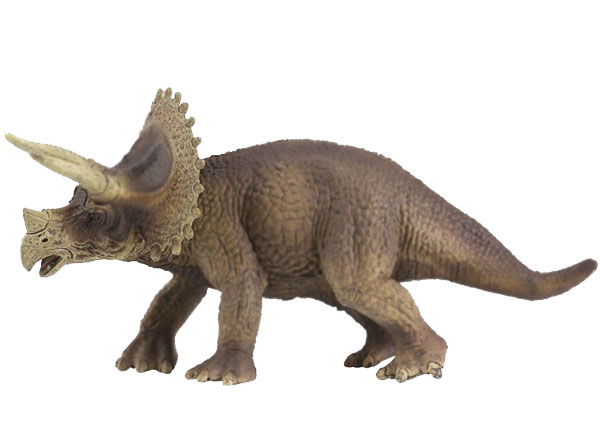
Standing about 3 metres tall at the hip and measuring up to 9 metres in length, Triceratops was a formidable quadruped with a distinctive skull that could reach up to 2.5 metres long—nearly one-third of its total body length. Its most famous features were its three facial horns: two long horns above the eyes and a shorter horn on the nose, along with a massive bony frill extending from the back of its skull.
As a herbivore, Triceratops possessed a sharp, parrot-like beak perfect for cropping tough vegetation, along with hundreds of small teeth arranged in dental batteries for grinding plant material. Scientists believe it fed on low-growing ferns, cycads, and other Cretaceous plants, using its powerful jaw muscles and sophisticated tooth arrangement to process fibrous vegetation.
Fossil evidence suggests that Triceratops lived in herds and may have engaged in dramatic head-to-head combat with rivals, similar to modern rhinoceroses. Its impressive frill and horns likely served multiple purposes: defence against predators like Tyrannosaurus rex, display during mating rituals, and establishing dominance within the herd.
Triceratops is instantly recognisable by its three prominent facial horns—two long horns above the eyes and a shorter nasal horn—combined with an enormous bony frill extending from the back of its skull. The skull could measure up to 2.5 metres long, making it one of the largest land animal skulls ever discovered.
Triceratops likely lived in herds and engaged in head-butting contests with rivals, evidenced by healed injuries found on fossil skulls. These ceratopsians probably used their impressive horns and frills for both defence against predators and social displays within their groups.
Triceratops has appeared in numerous films including the Jurassic Park franchise, Disney's Fantasia, and The Land Before Time series. It frequently features in dinosaur documentaries and remains one of the most popular dinosaur toys worldwide.
Triceratops was first described by Othniel Charles Marsh in 1889. The original fossils were discovered at Denver Formation, Colorado, USA.