
Ankylosaurus Facts
Pronunciation: ANG-ki-low-SORE-us
Name meaning: Fused Lizard
| Diet | Herbivore |
| Height | 1.7m |
| Length | 9m |
| Weight | 6 tonnes |
| Speed | 6 km/h |
| Environment | Land |
| Era | Cretaceous |
| Period | Late Cretaceous |
| Type | Ankylosaur |
| Location | Western North America |
| Diet | Herbivore |
| Height | 1.7m |
| Length | 9m |
| Weight | 6 tonnes |
| Speed | 6 km/h |
| Environment | Land |
| Era | Cretaceous |
| Period | Late Cretaceous |
| Type | Ankylosaur |
| Location | Western North America |
Ankylosaurus was a massive, heavily armoured ankylosaur that lived during the very end of the Cretaceous Period, approximately 70-66 million years ago. This formidable herbivore roamed the ancient landscapes of western North America, making it one of the last non-avian dinosaurs before the great extinction event. Named by palaeontologist Barnum Brown in 1908, its name means 'fused lizard', referring to the fused bones in its skull and body armour.
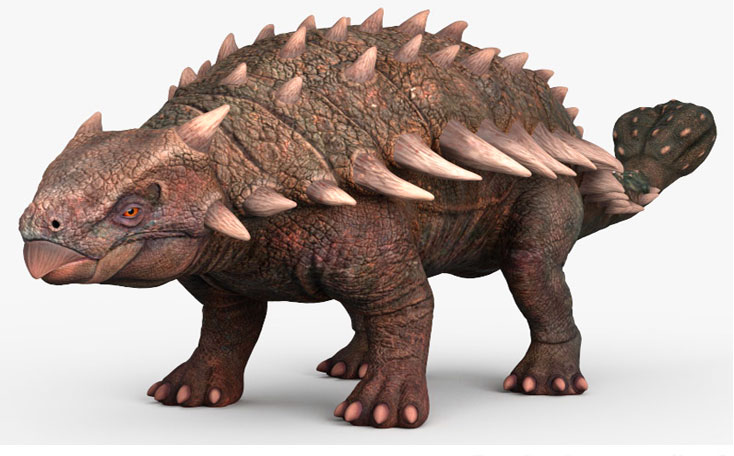
Built like a living tank, Ankylosaurus measured up to 9 metres long and weighed around 6 tonnes. Its most distinctive feature was its incredible defensive armour - rows of bony plates called osteoderms covered its back, sides, and even its eyelids. The ankylosaur's massive tail ended in a fearsome club made of fused vertebrae and bone, which could deliver devastating blows to predators like Tyrannosaurus rex.
As a herbivore, Ankylosaurus had a relatively small head with a beak-like mouth perfect for cropping low-growing plants, ferns, and shrubs. Its broad, barrel-shaped body housed an enormous digestive system needed to process tough plant material. Despite its intimidating appearance, this ankylosaur was a peaceful browser that only used its weaponry in self-defence.
Surprisingly, despite being the most famous member of its group, Ankylosaurus is known from relatively few fossil specimens, and no complete skeleton has ever been discovered. This has made studying its exact anatomy and behaviour more challenging than for some other dinosaurs.
Ankylosaurus was distinguished by its extensive body armour of bony plates and spikes covering its back and sides, protective bony eyelids, and most famously, a massive club at the end of its tail formed from fused bone. Its broad, low-slung body and relatively small head gave it an unmistakable tank-like appearance.
Ankylosaurus was likely a slow-moving browser that spent most of its time feeding on low-growing vegetation. When threatened, it probably crouched low to protect its unarmoured belly and used powerful neck and tail muscles to swing its club at attackers' legs, potentially breaking bones and crippling predators.
Ankylosaurus has appeared in numerous dinosaur films and documentaries, often portrayed as a peaceful but formidable tank-like creature. It featured prominently in the BBC's Walking with Dinosaurs series and appears in various dinosaur video games and children's books.
| Phylum | Chordata |
| Class | Ornithischia |
| Family | Ankylosauridae |
| Genus | Ankylosaurus |
Ankylosaurus was first described by Barnum Brown in 1908. The original fossils were discovered at Hell Creek Formation, Montana, USA.